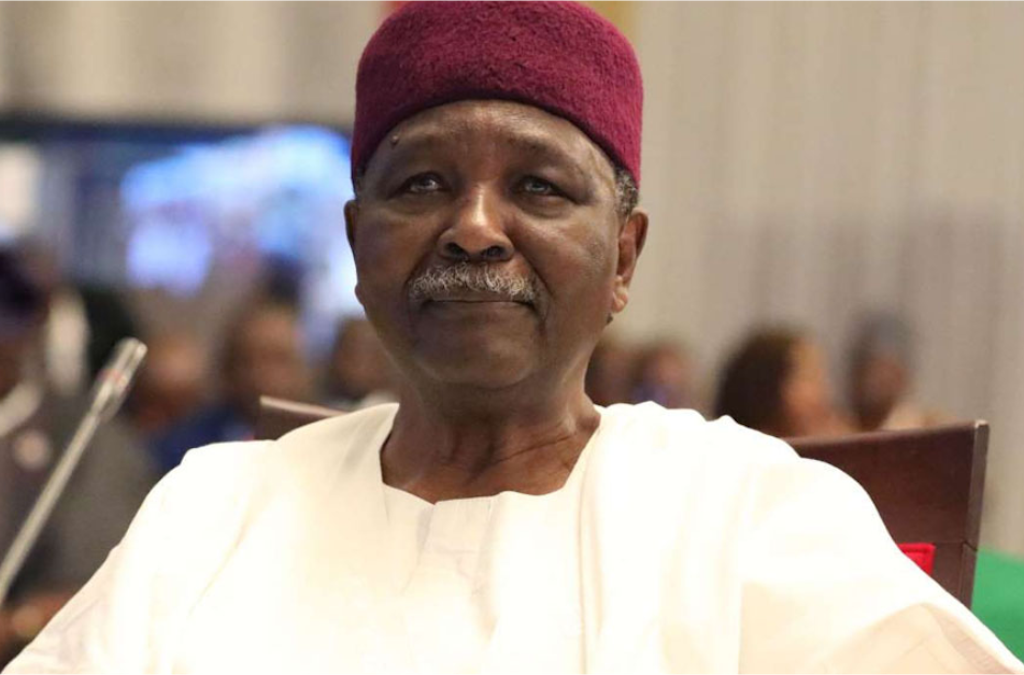
Yakubu Gowon: The Burden of Holding Nigeria Together
The Soldier Who Led Nigeria Through Its Greatest Crisis
By Tsar Fam
“There is no question of a victor and a vanquished. We are all Nigerians, and the victory is a victory for Nigeria.”
— Yakubu Gowon, broadcast marking the end of the Nigerian Civil War, January 1970
An Unlikely Leader
Yakubu Gowon was thirty-one years old when he took over the leadership of Nigeria on 1 August 1966, three days after the counter-coup of July 29 1966.
By August 1966, the country was barely six years independent. Its first civilian government led by Sir Abubakar Tafawa Balewa had been overthrown in the coup of 15 January 1966. Major-General Johnson Aguiyi-Ironsi, who assumed power on 16 January after that coup, had himself been abducted in Ibadan and killed during the counter-coup of 29 July 1966 led largely by northern soldiers. In barracks across the country, officers were being identified by region and ethnicity. In northern towns, Igbo civilians and other easterners were attacked in successive waves of violence.
It was from this breakdown that Gowon emerged as head of state.
He was not the most senior surviving officer. Nor did he command an established political following. What he possessed was a combination of identities that seemed, for the moment, to make him acceptable to men who agreed on little else. He was northern, but not Hausa or Fulani. He was Christian, but from a region whose political leadership was largely Muslim. He belonged to the Ngas, a minority community from the area now known as Plateau State. In a federation organised around large regional blocs, Gowon stood outside the dominant ethnic establishments.
That relative distance from the major centres of power helped make him a compromise candidate. It also placed him at the centre of a crisis for which neither his age nor his experience could have fully prepared him.
His nine years in office would contain a civil war, mass starvation, the creation of states, the beginning of Nigeria’s oil boom, an ambitious programme of national reconstruction and the expansion of federal power. They would also produce one of the enduring contradictions of Nigerian history: a government that spoke of reconciliation while presiding over policies that left many of the defeated economically dispossessed.
A Childhood Outside the Political Centre
Gowon was born on 19 October 1934 in Lur, near Pankshin, in what is now Plateau State. His parents, Yohanna and Matwok Kurnyang Gowon, were Christian missionaries associated with the Church Missionary Society. Much of his childhood was spent in Wusasa, near Zaria, a settlement shaped by missionary education and by the coexistence of people from different parts of northern Nigeria.
His upbringing placed him within the north but outside its political aristocracy. The household was Christian, disciplined and closely connected to missionary life. Gowon grew up in an environment where education, service and religious conviction were treated as obligations rather than ornaments.
At Government College, Zaria, he became known as a sportsman. He ran, boxed and played football. The nickname “Jack”, which followed him into military life, dated from these early years.
He joined the Nigerian army in 1954, when it was still an institution of the colonial state. He trained at the Royal Military Academy Sandhurst and was commissioned in 1955. Like many Nigerian officers of his generation, he rose quickly as British personnel withdrew and African officers assumed greater responsibility.
His service with Nigerian troops in the Congo during United Nations operations in the early 1960s exposed him to the dangers of a state in collapse: mutinous soldiers, rival authorities, international intervention and political fragmentation. He served there during the United Nations Operation in the Congo, first in 1960–1961 and again in 1963. At the time, the Congo appeared to be an external crisis. Within a few years, some of its conditions would become recognisable in Nigeria.
By January 1966, Gowon was a lieutenant-colonel. The Nigerian army remained relatively small, but it had already become entangled in the country’s regional tensions. When a group of mainly Igbo officers launched a coup that month, killing Prime Minister Abubakar Tafawa Balewa, Northern premier Ahmadu Bello, Western premier Samuel Akintola and several senior military officers, the army ceased to be merely an instrument of the state. It became the arena in which the future of the state would be decided.
Major-General Aguiyi-Ironsi assumed power after the coup. He appointed Gowon chief of army staff, but the new government struggled to convince northerners that it represented more than a transfer of power to Igbo officers.
The coup had killed several of the north’s most prominent leaders while sparing most senior Igbo politicians. Although Ironsi was not established as one of its organisers, his failure to prosecute the surviving plotters quickly deepened suspicion. His attempt to replace the federal system with a more centralised arrangement was interpreted in much of the north as confirmation that regional autonomy was being dismantled in favour of Igbo control.
On 29 July 1966, northern soldiers struck back. Ironsi and the military governor of the Western Region, Adekunle Fajuyi, were abducted at Government House in Ibadan and killed. Igbo officers were murdered in barracks. The chain of command disintegrated. Some northern soldiers wanted the north itself to leave Nigeria.
It was in this atmosphere that Gowon was selected to lead the country, formally assuming power on 1 August 1966.
His authority was uncertain from the beginning. Chukwuemeka Odumegwu Ojukwu, the military governor of the Eastern Region, refused to accept that the army’s command could pass to a junior officer while more senior men remained alive. Brigadier Babafemi Ogundipe technically outranked Gowon, but he was unable to secure obedience from the soldiers who now controlled the barracks.
A Country Losing Faith in Itself
Gowon inherited not simply a divided government but a population losing faith in the possibility of living together.
During the second half of 1966, Igbo civilians and other easterners were attacked in northern cities and towns. The number killed remains disputed, but the scale of the violence was sufficient to send hundreds of thousands of people fleeing towards the Eastern Region.
They arrived with stories of murder, humiliation and abandonment. Some had lost relatives. Others had left homes, businesses and possessions behind. The federal government condemned the killings, but condemnation did not restore confidence. Gowon’s control over the army was incomplete, and the government failed to demonstrate that it could protect easterners living outside their region.
For Ojukwu, the massacres changed the political question. The issue was no longer merely the structure of the federation. It was whether easterners could safely remain inside it.
Gowon and Ojukwu began a tense contest of proclamations, accusations and negotiations. Both men were relatively young. Both were army officers who had inherited political roles through crisis. Each believed the other was placing Nigeria on a path towards disintegration.
On 4 and 5 January 1967, they met with other members of the Supreme Military Council at Aburi in Ghana, under the auspices of Ghanaian head of state Lieutenant-General Joseph Ankrah. The meeting appeared, briefly, to offer a way back from war.
The participants agreed to a looser arrangement in which major military decisions would be taken collectively, and the regions would exercise greater control over appointments and administration. But the language of the settlement was not precise enough to survive the distrust surrounding it.
Ojukwu returned to the East believing that Nigeria had effectively agreed to a confederal system. Gowon’s advisers concluded that Ojukwu’s interpretation would leave the federal government unable to govern. When Lagos subsequently issued a decree intended to implement the agreement, the Eastern government argued that important provisions had been altered or abandoned.
Aburi became more than a failed negotiation. It became a historical accusation.
For Biafran supporters, it showed that Gowon could not be trusted to honour an agreement. For federal officials, it showed that Ojukwu was using an ambiguous settlement to obtain powers that amounted to secession in all but name.
The documentary record leaves room for criticism of both sides. Ojukwu pressed the agreement towards confederation. Gowon’s government failed to ensure that the terms were understood consistently before the delegates left Aburi on 5 January 1967. What had been presented as a settlement became another stage in the collapse.
On 27 May 1967, Gowon abolished the four regions and divided Nigeria into twelve states.
The decision answered longstanding minority demands. In the Eastern Region, non-Igbo communities had often feared domination by the larger Igbo population. State creation gave political recognition to some of those minorities. It also transformed the approaching conflict.
The former Eastern Region was divided into three states: East-Central, Rivers and South-Eastern. Most Igbo areas fell within East-Central State, while the oil-producing territories and access to the sea lay mainly in Rivers and South-Eastern states. Ojukwu’s authority over the whole region was therefore challenged at the moment he was preparing to leave the federation.
Three days later, on 30 May 1967, Ojukwu declared the Republic of Biafra in Enugu, then the capital of the Eastern Region.
The War for Nigeria
Gowon described the first federal military operations as a “police action”. The phrase suggested that the rebellion could be contained quickly and the federation restored without prolonged destruction. That expectation did not survive the opening months of the war.
Fighting began on 6 July 1967, when federal forces opened military operations against Biafra along the northern front. On 9 August 1967, Biafran forces moved westward across the Niger into the Mid-Western Region, raising the possibility that they might reach Lagos. Federal troops subsequently recovered the territory and gradually forced Biafra back towards the east.
The conflict, which continued from July 1967 until January 1970, expanded the Nigerian army from a relatively small force into a mass institution. New divisions were created, recruits were drawn from across the federation and officers who had once occupied modest commands suddenly controlled thousands of men. The war militarised Nigerian political life and produced a generation of officers who would continue to shape government long after the fighting ended.
Gowon insisted that the federal campaign was directed against secession, not against the Igbo as a people. He instructed commanders to protect civilians and repeatedly spoke of the need to make reconciliation possible after victory.
Those directives form part of the historical record. So do the atrocities committed by federal troops.
Civilians were killed in several locations. Homes and businesses were looted. Women were subjected to abuse. Biafran forces also committed violations, particularly during their occupation of the Mid-West and in their treatment of people suspected of disloyalty. The existence of abuses on both sides, however, did not make their scale or consequences identical.
The most devastating feature of the war was not battlefield combat but hunger.
As federal troops captured the coast and encircled Biafra, food production and distribution collapsed. The Biafran government mobilised the population for war, requisitioned supplies and attempted to sustain a state whose territory was steadily shrinking. Federal control of roads, ports and air access made relief increasingly difficult.
Images of severely malnourished children reached the international press. The humanitarian crisis became one of the first African disasters to enter homes across Europe and North America through television. Religious groups, charities and newly formed relief organisations organised clandestine night flights into Biafra.
The federal government argued that the same air routes were being used to bring in weapons. It demanded that relief pass through channels subject to federal inspection. Biafra rejected arrangements it believed would expose its military position or amount to an admission that it was no longer sovereign.
Between those positions stood a civilian population whose need became more urgent each week.
Gowon’s government did not create every cause of the famine. Biafran military decisions, the mobilisation of labour and the refusal of some proposed relief arrangements also affected the crisis. But the federal blockade was decisive. Restrictions remained in place even after the scale of starvation had become internationally visible.
The question of intention continues to divide historians. Some writers describe the starvation as evidence of a genocidal campaign against the Igbo. Others argue that the available record does not establish a centrally directed plan to exterminate an ethnic population, even though federal strategy knowingly imposed conditions in which civilians died in enormous numbers.
No precise death toll can be established. Estimates vary from several hundred thousand to around one million or more. What is beyond serious dispute is that hunger and disease killed far more civilians than direct fighting did.
Gowon later rejected the claim that he intended the destruction of the Igbo. He pointed to civilian-protection orders, proposed relief corridors and the absence of mass punishment after the war. His critics answered that official declarations cannot be separated from the consequences of policies pursued under his authority.
This remains the central moral burden of his rule. He may not have sought the extermination of a people, but he led the government that maintained the siege under which they starved.
“No Victor and No Vanquished”
By the end of 1969, Biafra had been reduced to a narrow and exhausted territory. Its military position was collapsing. On 10 January 1970, Ojukwu left Biafra for Côte d’Ivoire, saying that his departure was intended to facilitate peace. Philip Effiong assumed authority and, on 12 January 1970, announced that Biafra would cease resistance and accept the authority of the Federal Military Government. He subsequently led the Biafran delegation to Lagos, where the formal surrender was accepted.
The war ended without the final spectacle of Ojukwu in federal custody. On 15 January 1970, Gowon addressed the nation from Lagos at the formal conclusion of the conflict. His victory address was restrained. There would be, he declared, “no victor and no vanquished”. Nigeria would pursue reconciliation, rehabilitation and reconstruction.
The words mattered. Civil wars often end in execution, imprisonment, confiscation and collective punishment. In the aftermath of the surrender in January 1970, Gowon’s government did not organise mass trials of the Biafran leadership. Former combatants were screened rather than systematically eliminated. The federal government rejected a formal policy of revenge. Yet the reality of peace did not always match its language.
The former Biafran territory had been devastated by the thirty-month war of July 1967 to January 1970. Roads, schools, hospitals and markets required reconstruction. Families returned to damaged homes or found that the property they had left elsewhere in Nigeria had been occupied. In the immediate post-war years, especially in Rivers State, property abandoned by fleeing Igbo owners during the conflict was classified as abandoned and transferred to new occupants. The legal and administrative procedures through which these decisions were made often worked against the original owners. The post-war banking settlement created an additional grievance. People whose pre-war deposits could not be verified were generally given twenty pounds, regardless of how much they claimed to have held before the conflict. The government defended the policy as a response to destroyed records and the invalidation of Biafran currency. For many former Biafrans beginning again in 1970, it amounted to the loss of a lifetime’s savings.
The gap between the declared peace of January 1970 and the material experience of the defeated was therefore substantial. There were no mass executions, but there was widespread impoverishment. There was official reconciliation, but many families emerged from the war without property, savings or access to capital.
“No victor and no vanquished” became both the most humane sentence associated with Gowon and one of the most contested.
It described the peace he said he wanted. It did not describe the conditions under which all Nigerians entered it.
Building a New Federation
Victory gave Gowon a level of authority he had never possessed at the beginning of the war. The old regions had been broken into states. The federal military government controlled a greatly expanded army. Oil production resumed, and the state acquired revenues on a scale previously unknown in Nigeria.
The years after the war became a period of reconstruction and centralisation. Roads, schools, ports and public institutions expanded. The federal government assumed greater control over universities and major infrastructure. Public enterprises multiplied.
The oil-price increases of the early 1970s created the impression that financial limits had disappeared. Government departments commissioned ambitious projects and imported equipment, machinery and materials. The difficulty was no longer simply raising money. It was spending it competently. Administrative capacity did not grow as quickly as revenue. Contracts were poorly supervised. Ministries placed overlapping orders. Political connections increasingly influenced access to state business. Public expenditure encouraged construction and industrial activity, but it also created opportunities for waste and private enrichment.
The Nigerian Enterprises Promotion Decree of 1972 was intended to transfer economic power from foreign companies to Nigerian citizens. Certain businesses were reserved for Nigerian ownership, while local participation was required in others. The policy appeared to extend independence from politics into commerce. In practice, the Nigerians best placed to acquire shares and enterprises were often those with access to capital, government information and senior officials. Indigenisation broadened Nigerian ownership, but it also helped form a politically connected business class.
Gowon’s government nevertheless created institutions whose significance outlasted the oil boom. The National Youth Service Corps, established in 1973, required graduates to spend a year working outside their home regions. It was an attempt to answer the civil war through social experience. Young Nigerians were to encounter communities they might otherwise have known only through stereotype or political suspicion. The programme reflected Gowon’s deepest political conviction: that Nigeria could survive only if its people learned to imagine themselves beyond region.
The same instinct shaped his foreign policy. Alongside Togo’s Gnassingbé Eyadéma, he promoted regional economic cooperation in West Africa. Their efforts contributed to the signing of the Treaty of Lagos in 1975 and the establishment of the Economic Community of West African States.
For Gowon, federation was not simply a constitutional arrangement. It was a philosophy of scale. Small communities, he believed, gained security and opportunity by belonging to larger political structures.
Yet the same philosophy could justify the accumulation of power at the centre. The federal government became stronger, but local grievances did not disappear. Oil-producing communities, minority groups and former Biafrans continued to ask whether unity meant participation or merely obedience to Lagos.
The Promise He Could Not Keep
After the war, Gowon announced a programme that was expected to return Nigeria to civilian rule in 1976. Before then, the government would reconstruct the country, conduct a census, design a constitution, create political institutions and prepare for elections. The timetable gave the regime a destination. It also gave Nigerians a date against which its sincerity could be measured.
The census became an early warning. Population figures had enormous political importance because they influenced representation, revenue and the balance between regions. The 1973 exercise was surrounded by allegations of inflation and manipulation. Confidence in the results collapsed.
Then, on 1 October 1974, Gowon announced that the 1976 transition date was unrealistic. His argument was that the country had not yet created the conditions for stable civilian government. The institutions were incomplete. The divisions that had produced the war had not disappeared. A hurried handover, he suggested, might return Nigeria to crisis. To his critics, the reasoning sounded less like caution than self-preservation.
No firm alternative date was given. A government that had justified its rule as temporary now appeared prepared to determine for itself when Nigerians were ready to govern themselves. The postponement altered Gowon’s standing. The young officer who had been presented as a reluctant emergency leader now appeared to have settled into power. Within the military, frustration increased. Among civilians, the promise of transition began to look unreliable.
The administrative failures of the oil boom added to the discontent. The most memorable was the cement crisis. Government agencies and contractors ordered quantities of cement far beyond the capacity of Nigerian ports to receive. Ships gathered offshore, waiting for berths that were unavailable. Contracts required payment for delays, increasing the cost to the government. The “cement armada” became a metaphor for the period: money without planning, ambition without coordination and a state unable to control the scale of its own purchases.
Corruption allegations spread through ministries and state governments. Gowon was not convicted of stealing public funds, and his personal lifestyle was often described as less extravagant than that of some officials around him. But personal modesty did not resolve the problem of political responsibility. He presided over a system in which oil wealth expanded faster than mechanisms of oversight.
By 1975, the qualities that had once made him acceptable- patience, caution and preference for compromise were increasingly interpreted as indecision.
The Coup from Kampala
On 29 July 1975, Gowon was in Kampala attending a summit of the Organisation of African Unity when Nigerian soldiers announced that his government had been overthrown. The broadcast was delivered by Colonel Joseph Garba, commander of the Brigade of Guards. Brigadier Murtala Muhammed became head of state. There was no prolonged fighting. Gowon did not attempt to mobilise loyal forces or return by force. He accepted his removal and went into exile in Britain. The ease of the coup revealed how far his authority had weakened.
Nine years earlier, he had emerged because officers considered him the figure most capable of holding the army together. Now sections of that same institution had concluded that the country could no longer move forward under his leadership. His restraint after the coup prevented another violent struggle for power. It also marked the end of the longest continuous period of rule by any Nigerian military leader up to that time.
In exile, Gowon entered an unexpectedly different life. He became a student. At the University of Warwick, the former head of state studied political science and eventually completed a doctorate on ECOWAS and regional integration. The subject was closely connected to his record in office, but the circumstances were striking. A man who had governed a vast country now attended seminars, conducted research and submitted his arguments to academic examination.
The exile did not remain peaceful for long.
In February 1976, Murtala Muhammed was assassinated during an attempted coup led by Bukar Suka Dimka. Nigerian authorities alleged that Gowon was connected to the plot and demanded his return from Britain. Gowon denied the allegation. He was never tried in a Nigerian court, and Britain did not extradite him. Dimka’s statements implicated him, but the claim was never tested through a full judicial process. Even though Gowon was accused by the government that succeeded him, his guilt was not legally established. However, his rank and benefits were removed.
Years later, he was pardoned by President Shehu Shagari, and in 1987 the Babangida government restored his military rank and entitlements.
The Former Ruler as National Elder
When Gowon returned to Nigeria, he no longer possessed executive power. What remained was the authority of memory. He became associated with the University of Jos and established the Yakubu Gowon Centre, whose programmes addressed conflict management, governance and public health. He participated in campaigns against guinea worm and other diseases and appeared at national events as a former head of state.
Religion became increasingly prominent in his public life. Through Nigeria Prays, he promoted interdenominational Christian prayer for peace and unity. The language was consistent with the central theme of his career. Gowon had spent his years in power trying to preserve Nigeria through military and political means. In later life, he framed the same objective in moral and spiritual terms.
His public image also softened with age. The officer who had governed during the country’s most destructive war gradually came to be presented as an elder statesman. Younger political leaders consulted him. Anniversary events celebrated his role in national unity. His personal courtesy and apparent lack of bitterness towards those who removed him contributed to this reputation.
But the transformation from ruler to elder did not settle the argument over his government.
Former Biafrans and their descendants continued to recall the blockade, the hunger, the twenty-pound settlement and abandoned properties. The civil war remained not merely an episode in Gowon’s past but an unresolved part of Nigeria’s political present. His later appeals for unity could therefore be heard in two ways. To some, they reflected a lifelong commitment to national survival. To others, they repeated the demand for unity without fully confronting the terms on which that unity had been imposed.
The Meaning of Gowon
Gowon’s historical significance lies less in a single achievement or failure than in the system that took shape during his rule. He inherited a federation on the edge of dissolution and left behind a more centralised state. He created new political units, expanded the military, increased federal control of revenue and built institutions intended to weaken regional isolation.
The Nigeria that emerged from the civil war was, in several respects, the Nigeria that continued into the following decades: dependent on oil, governed from a powerful centre, divided into states rather than large regions and repeatedly managed by military officers who claimed to act in the name of national stability.
His government preserved the country’s territorial borders. That outcome made possible Nigeria’s later role as a major African state. A fragmented federation would have produced a different political history for West Africa.
However, the federal victory did not answer the fears that had driven eastern secession. It did not fully resolve the place of minorities, the distribution of oil revenue or the distrust between communities and the federal state. In some respects, military victory postponed those questions rather than settling them.
Gowon’s legacy is therefore neither the simple story of a soldier who saved his country nor the equally simple story of a ruler defined only by war. He showed restraint after victory but not enough urgency during the humanitarian catastrophe. He spoke the language of reconciliation but permitted economic policies that deepened the losses of the defeated. He built institutions of national integration while concentrating power in a military government. He promised civilian rule and then withdrew the date.
Even his most famous declaration contains the tension of his career. “No victor and no vanquished” was a statement of what Nigeria needed to become. It was not a complete description of what Nigeria had become.
Gowon’s life offers no easy conclusion because the country he governed offered none. He rose at a moment when constitutional order had collapsed, and his response was to preserve the federation through military authority. That decision held Nigeria together, but it also ensured that the meaning of unity would remain inseparable from the memory of force.
His place in history rests between preservation and destruction, mercy and responsibility, national ambition and administrative failure.
He was the young officer who inherited a broken country, the wartime leader who refused to accept its division, the victor who rejected the language of conquest and the ruler who stayed long enough to lose the confidence that had brought him to power.
Conclusion
Few Nigerian leaders have left a legacy as consequential and as contested as Yakubu Gowon. His government preserved the territorial integrity of Nigeria and laid foundations that continue to shape the country's political and institutional life. At the same time, it presided over a civil war whose humanitarian consequences remain among the darkest chapters in Nigeria's history, while many of its post-war policies continue to influence debates about justice, reconciliation and national belonging.
More than five decades after he left office, Gowon remains a figure viewed through sharply different historical lenses. To some, he is the military leader who prevented the disintegration of Nigeria and sought reconciliation after victory. To others, he bears ultimate responsibility for policies that inflicted profound suffering and left lasting grievances, particularly in the former Biafra. Neither perspective alone fully explains his place in history.
The complexity of Gowon's career resists simple judgment. His record contains both state-building and state failure, restraint and coercion, reconciliation and unresolved injustice. Understanding his life therefore requires acknowledging both what his government achieved and what it cost. It is in that tension, rather than in any single triumph or failure, that Yakubu Gowon's enduring historical significance is found.
Bibliography
Bird, Frederick, and Fraser M. Ottanelli (eds.). The History and Sociology of Genocide: Analyses and Case Studies. Lewiston, NY: Edwin Mellen Press, 2010.
Daly, Samuel Fury Childs. A History of the Republic of Biafra: Law, Crime, and the Nigerian Civil War. Cambridge: Cambridge University Press, 2020.
Diamond, Larry. Class, Ethnicity and Democracy in Nigeria: The Failure of the First Republic. Syracuse, NY: Syracuse University Press, 1988.
Elaigwu, J. Isawa. Gowon: The Biography of a Soldier-Statesman. Ibadan: West Books, 1986.
Forsyth, Frederick. The Biafra Story. Harmondsworth: Penguin Books, 1969.
Gowon, Yakubu. My Life of Duty and Allegiance. Abuja: Yakubu Gowon Foundation, 2026.
Gowon, Yakubu. The Economic Community of West African States: A Study in Political and Economic Integration. PhD thesis, University of Warwick, 1984.
Kirk-Greene, A. H. M. Crisis and Conflict in Nigeria: A Documentary Sourcebook, 1966–1970. 4 vols. London: Oxford University Press, 1971–1977.
Luckham, Robin. The Nigerian Military: A Sociological Analysis of Authority and Revolt 1960–67. Cambridge: Cambridge University Press, 1971.
Madiebo, Alexander A. The Nigerian Revolution and the Biafran War. Enugu: Fourth Dimension Publishers, 1980.
Nwosu, Edmund. The Civil War Years: The Memoirs of Edmund Nwosu. Ibadan: Spectrum Books, 2008.
Obasanjo, Olusegun. My Command: An Account of the Nigerian Civil War, 1967–1970. London: Heinemann, 1980.
Ojukwu, Chukwuemeka Odumegwu. Because I Am Involved. Ibadan: Spectrum Books, 1989.
Siollun, Max. Oil, Politics and Violence: Nigeria's Military Coup Culture (1966–1976). New York: Algora Publishing, 2009.
Siollun, Max. Soldiers of Fortune: Nigerian Politics from Buhari to Babangida, 1983–1993. London: Cassava Republic Press, 2020.
Stremlau, John J. The International Politics of the Nigerian Civil War, 1967–1970. Princeton: Princeton University Press, 1977.
United States Department of State. Foreign Relations of the United States, 1969–1976, Volume E-5, Part 1: Documents on Sub-Saharan Africa, 1969–1972. Washington, DC: Office of the Historian.
United States Department of State. Foreign Relations of the United States, 1969–1976, Volume E-6: Documents on Africa, 1973–1976. Washington, DC: Office of the Historian.
Uche, Chibuike C. "Oil, British Interests and the Nigerian Civil War." Journal of African History 49, no. 1 (2008): 111–135.
University of Warwick. Yakubu Gowon Doctoral Thesis Repository. University of Warwick Library.
ECOWAS Commission. History of ECOWAS. Abuja: Economic Community of West African States.
Nigerian National Archives (Kaduna, Ibadan and Enugu branches). Military Government files, Federal Executive Council papers, and State Creation records, 1966–1975.
National Archives (United Kingdom), Kew. Foreign and Commonwealth Office (FCO) files relating to Nigeria and the Nigerian Civil War, 1966–1975.
De St. Jorre, John. The Nigerian Civil War. London: Hodder & Stoughton, 1972.
Achebe, Chinua. There Was a Country: A Personal History of Biafra. London: Penguin Books, 2012.