Olu Arowolo Verheijen: Finance, Energy and the Making of Public Policy
A Biography of Investment, Energy and National Reform
By Enobong Abasiono
"Energy, in its many forms, is a vital path to higher-paying jobs, to industrialisation, to innovation and to sustained prosperity." — Olu Arowolo Verheijen, Executive Session of the Energy Institute Nigeria and NAPE, 13 November 2024.
Introduction
The appointment of Olu Arowolo Verheijen as Special Adviser on Energy to President Bola Ahmed Tinubu in June 2023 marked a noticeable change in the profile of Nigeria's presidential energy advisers. Earlier advisers had tended to come from a handful of familiar backgrounds: the petroleum bureaucracy, as in the case of Rilwanu Lukman; state-owned electricity and energy institutions, represented most notably by Yahaya Dikko and, to a lesser extent, Joseph Makoju; and academia, represented by Anthony Adegbulugbe. Verheijen came through a rather different route. Her career had been built largely around international finance, multinational energy companies, private investment and global policy institutions. Her appointment therefore suggested not only a change in professional background, but perhaps more significantly, a generational shift in the kind of expertise being brought into presidential energy policymaking.
For reasons that were never particularly well explained in public, President Muhammadu Buhari's administration did not maintain a comparable dedicated presidential energy advisory office. Energy policy was handled mainly through ministers, agencies and other sector institutions. Verheijen's appointment effectively restored a focal point within the Presidency for coordinating priorities that cut across oil and gas, electricity, investment, regulation and the energy transition.
She had already built an international professional profile before entering government. Among other roles, she served as a Senior Adviser to the Energy for Growth Hub, sat on the Advisory Council of the United States Millennium Challenge Corporation (MCC), and participated in international forums concerned with Africa's energy and investment prospects. Her career was unusual in the sense that it moved repeatedly between commercial energy, finance, investment and policy rather than remaining within a single institutional track.
The timing of her appointment was also important. Nigeria was contending with weak upstream investment, chronic electricity shortages, the still-early implementation of the Petroleum Industry Act 2021, and a wider international debate over how hydrocarbon-producing developing countries should respond to global decarbonisation. Against that background, Verheijen's experience in finance, commercial negotiation and energy investment appeared closely aligned with the Tinubu administration's early emphasis on attracting capital and improving coordination across the sector.
From Finance to Energy
Verheijen studied economics and political science at Long Island University in the United States, graduating *magna cum laude*, before proceeding to the Harvard Kennedy School for a Master in Public Policy. Her graduate training brought together public policy, economics, governance and related fields. It would be easy, with hindsight, to read her later career back into that education, but the combination did give her an early grounding in both markets and public institutions—two areas that would repeatedly intersect in her subsequent work.
She began her professional career as a Senior Associate in the Public Finance Department at Moody's Investors Service in New York. There, her work involved assessing the creditworthiness of governments and public institutions and carrying out financial and credit analysis relating to public finance and capital markets.
The significance of that experience probably went beyond the mechanics of credit analysis. Credit-rating work requires attention to the things investors tend to worry about: fiscal management, institutional credibility, regulation, governance and the ability of an institution or government to meet its obligations. Those concerns would later reappear in a different form throughout Verheijen's energy career. Whether she was evaluating an investment, negotiating a transaction or discussing public policy, the recurring question was broadly the same: under what conditions will capital actually move?
That early exposure may also help explain the emphasis she would later place on predictable regulation, commercially credible policies and institutional performance. These themes are hardly unique to Verheijen, of course, but they became particularly prominent in her public interventions on energy investment.
Learning the Business of Energy
Verheijen joined Shell in 2006, moving from financial analysis into the energy industry. She entered as a Commercial Adviser and remained with the company for roughly eleven years. During that period, she moved through four increasingly senior commercial and strategic positions before becoming Deal Lead in 2015.
Her work covered business development, natural gas commercialisation, mergers and acquisitions, finance and corporate governance. Much of it was connected to upstream petroleum operations in Sub-Saharan Africa. She participated in negotiations involving oil and gas assets, worked on commercial arrangements for major energy developments and contributed to investment decisions across several African markets.
Natural gas commercialisation became an important part of that work. In Nigeria, the difficulty has rarely been the absence of gas resources. The harder problem has been turning those resources into commercially viable projects in an environment constrained by infrastructure gaps, pricing questions, regulation and financing risk. This meant that producing gas was only part of the equation. Contracts had to work. Buyers had to be credible. Infrastructure had to be financed. Government policy had to make economic sense to investors.
Verheijen's responsibilities included working on commercial structures intended to bring together the often-competing interests of governments, energy companies, investors and customers. She was also involved in project financing and petroleum fiscal issues, areas that required close attention to whether a project was merely technically possible or genuinely bankable.
Her work eventually expanded well beyond gas. In mergers and acquisitions, she evaluated upstream petroleum assets and investment opportunities across African markets and participated in commercial due diligence, acquisitions, divestments and negotiations surrounding major transactions.
As Deal Lead, she led commercial negotiations connected with successful multi-billion-dollar mergers and acquisitions and worked on arrangements intended to secure additional post-transaction revenue from oil and gas sales, transportation and storage. Those assignments exposed her to a less visible side of the energy business: portfolio choices, contractual risk, fiscal terms, transaction structure and the sometimes considerable difference between the geological value of an asset and its actual commercial value.
One project associated with her period at Shell was Nigeria's first World Bank Partial Risk Guarantee for domestic gas supply to government-owned power plants. The arrangement was intended to reduce some of the risks that had discouraged investment in gas-to-power infrastructure. It provided a useful illustration of a recurring problem in African energy markets: having the resource is not necessarily enough. Projects may also require guarantees, credible buyers, workable contracts and mechanisms for sharing risks between governments, development institutions and private investors.
Her years at Shell also coincided with the growing prominence of renewable energy and climate policy in global investment discussions. Her later career suggests that she did not come to see hydrocarbons and renewable energy as two completely separate worlds. Instead, she appears to have developed a more integrated view of energy, particularly in African economies where questions of access, industrialisation and reliability complicate a simple fossil-fuel-versus-renewables framing.
By the time she left Shell, she had accumulated experience in commercial negotiation, corporate governance, project finance, capital allocation and petroleum economics. That gave her a fairly broad commercial foundation for what came next: investment in distributed renewable energy, advisory work and, eventually, government.
Energy Beyond Oil
After Shell, Verheijen moved beyond the traditional oil and gas industry into renewable energy, private investment, advisory services and policy work. The shift was significant. Her earlier career had largely revolved around large upstream petroleum projects; her subsequent work brought her much closer to questions of distributed electricity, venture investment and the financing of smaller-scale energy businesses.
She joined Persistent Energy, an Africa-focused investment platform specialising in distributed renewable-energy companies, where she became a partner and chair of the investment committee. Instead of assessing billion-dollar petroleum assets, she was now also looking at businesses attempting to provide electricity directly to commercial customers and communities that could not rely on the conventional grid.
The investment model was different, but some of the underlying questions were familiar. Was the business commercially sustainable? Could it scale? Was management credible? Would customers pay? What risks could investors reasonably take?
As chair of the investment committee, Verheijen participated in the evaluation and oversight of investments, including transaction execution, due diligence, capital allocation, governance, risk management and portfolio supervision. The role required more than finding promising renewable-energy technologies. The companies also needed business models capable of surviving difficult African operating environments.
During her time at Persistent, she participated in investments including Daystar Power, which developed solar-hybrid electricity systems for commercial and industrial customers in African markets. Work of this kind gave her direct exposure to decentralised power: an increasingly important part of the continent's electricity landscape, particularly for businesses that cannot afford to wait for national grids to become reliable.
The experience also appears to have broadened her understanding of what private capital can—and cannot—do in addressing Africa's energy deficit. Investment can expand infrastructure, but it still operates within electricity tariffs, regulation, foreign-exchange markets, customer purchasing power and public policy.
Verheijen later founded Latimer Energy, an advisory firm working with governments, investors and energy companies in Africa. Through the firm, she advised on commercial negotiations, investment strategy, project development, mergers and acquisitions, portfolio optimisation and energy-sector strategy.
Latimer's work drew together several strands of her previous career: petroleum economics, natural gas, fiscal policy, electricity reform, project finance and commercial strategy. A recurring concern was the commercial viability of energy projects—particularly what governments and project sponsors would need to change if they wanted long-term investors to commit capital.
Alongside her commercial work, Verheijen became increasingly involved in advisory assignments spanning government, development finance and the private sector. She advised on matters including infrastructure finance, investment policy, project development and commercial strategy. Much of the work sat in the uncomfortable space where public-policy objectives meet investor requirements. A government may want affordable electricity, for example, while investors need tariffs that cover costs and provide a return. Reconciling those interests is usually harder than stating either objective on its own.
As a Senior Adviser to the Energy for Growth Hub, Verheijen argued that energy access should be considered in relation to industrialisation and economic productivity, rather than treated only as a social-service problem. Her policy writings and public interventions examined how electricity, investment and economic growth interact in Nigeria and elsewhere in Africa, with particular attention to commercially functioning markets and institutions capable of supporting long-term investment.
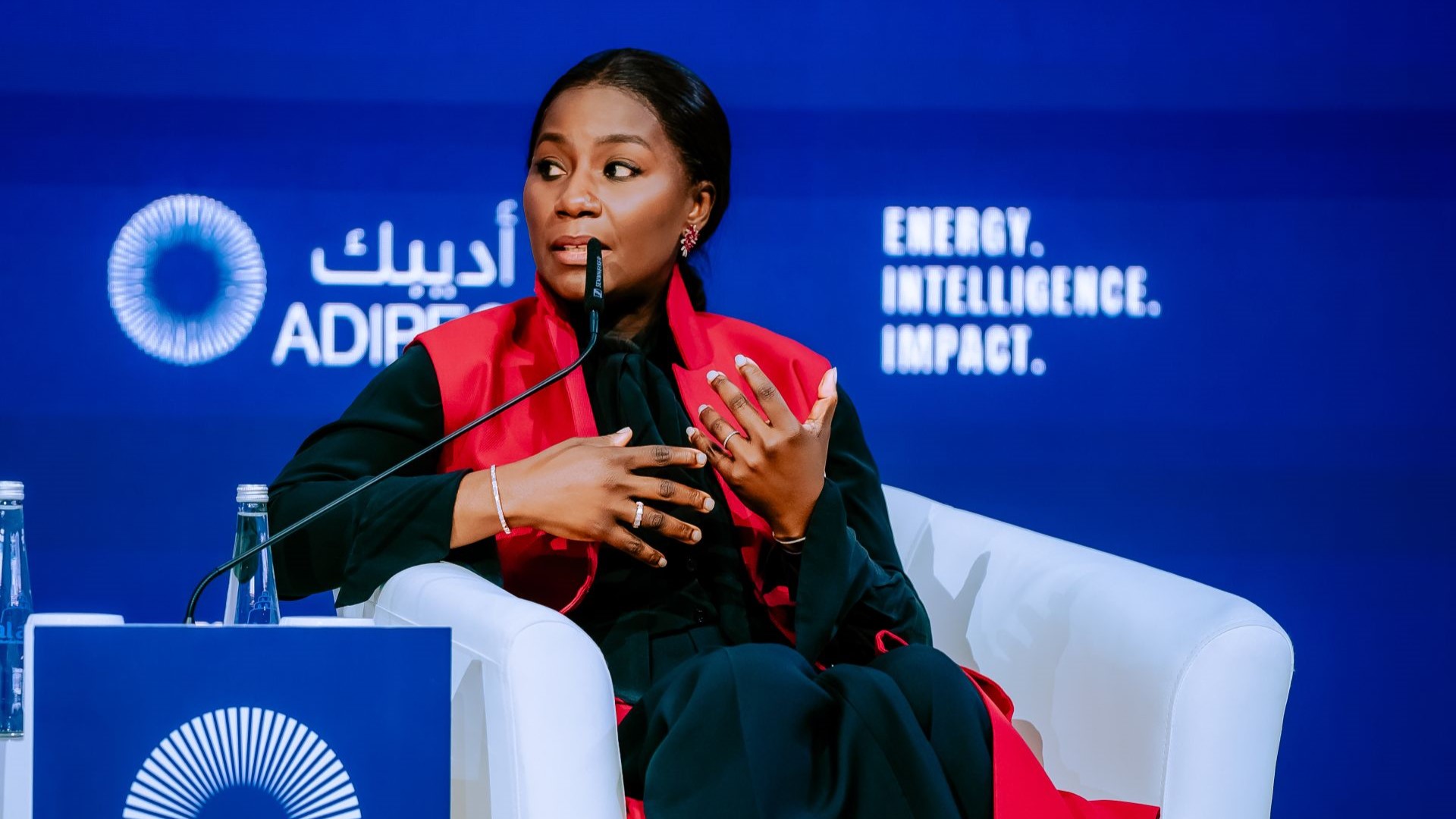
She also became a regular speaker at international energy and investment forums, including CERAWeek by S&P Global, African Energy Week, ADIPEC, the Gas Investment Forum, the Africa Soft Power Summit and Energy Council events. Her recurring subjects included petroleum investment, gas development, electricity access, infrastructure finance, regulation and the energy transition.
Across these appearances, one theme appeared repeatedly: Africa's energy problem is not simply a shortage of natural resources or technology. It is also a problem of markets, institutions, finance and incentives.
International Advisory and Policy Leadership
As Verheijen's career developed, she took on a growing number of roles in international policy and development institutions. These appointments brought her commercial experience into discussions that extended well beyond individual companies or projects.
Her relationship with the Energy for Growth Hub evolved through several roles, including Entrepreneur in Residence, Advisory Board Member and Senior Adviser. The organisation focuses on the relationship between energy, development and economic growth in emerging economies. This fitted closely with Verheijen's own argument that reliable energy should be understood as productive infrastructure: something factories, businesses, hospitals, schools and households require in order to function.
From 2020 to 2024, she also served two consecutive terms on the Advisory Council of the United States Millennium Challenge Corporation. The MCC Advisory Council is a federal advisory committee established under the Federal Advisory Committee Act to provide independent advice to the corporation on issues including development policy, infrastructure investment, governance and private-sector participation. MCC is a United States government development agency that provides grant-based development assistance to eligible partner countries. Its approach places considerable weight on governance, economic policy and measurable development outcomes. The Advisory Council brought together people from investment, government, development finance, academia and public policy. During her tenure, Verheijen participated in discussions concerning infrastructure, electricity markets, private investment, natural gas, climate policy and the mobilisation of capital for development.
Her contributions appear to have reflected the concerns that were already familiar from her commercial work: whether electricity markets are financially sustainable, whether regulation encourages investment, whether transmission infrastructure can support new generation, and how governments can attract private capital without losing sight of broader development objectives.
She also participated in debates over natural gas and climate policy. This was—and remains—a contested area. Many African governments regard gas as necessary for electricity generation and industrial development. Some climate-policy advocates, however, question whether new gas infrastructure risks locking countries into carbon-intensive assets for decades. Verheijen has generally argued for a development pathway that gives African countries room to use gas while building lower-carbon energy systems.
Her tenure placed her on the Council with figures drawn from international finance, development and public policy, including Thierry Tanoh, Nadia Schadlow, Daniel F. Runde, Stephen Groff, Tariye Gbadegesin and Valérie Vencatachellum. The range of backgrounds reflected the Council's broader purpose: bringing private-sector, policy and development perspectives into the same conversation.
Beyond those international roles, Verheijen has been involved with educational and professional organisations. She has served on the Board of Trustees of the Harvard Kennedy School Alumni Association of Nigeria, supporting professional networking and public-policy engagement among alumni.
She also established the BFA Foundation, a non-profit organisation focused on skills-acquisition scholarships for people from low-income backgrounds seeking opportunities in growing sectors. The initiative reflects another side of her development outlook: infrastructure matters, but so does the human capacity needed to make productive use of it.
Entering Public Service
President Bola Ahmed Tinubu took office in May 2023 at a difficult moment for Nigeria's energy sector. Crude oil production had weakened, upstream investment had fallen, the electricity system remained unreliable and implementation of the Petroleum Industry Act was still developing.
Against that background, Tinubu appointed Olu Arowolo Verheijen as Special Adviser on Energy on 15 June 2023.
As head of the Office of the Special Adviser to the President on Energy, Verheijen became involved in coordinating presidential priorities across a sector divided among several ministries, regulators, state-owned companies and other institutions. Her remit included oil and gas, electricity, energy transition, investment and regulatory reform.
That coordinating role is important because authority over Nigerian energy policy does not sit in one place. The Ministry of Petroleum Resources, Ministry of Power, Nigerian Upstream Petroleum Regulatory Commission, Nigerian Midstream and Downstream Petroleum Regulatory Authority, Nigerian National Petroleum Company Limited and numerous other institutions all exercise different statutory or operational functions. The presidential advisory office does not replace those bodies. Its role is closer to coordinating priorities, resolving cross-agency issues and providing the President with policy advice.
Verheijen also became one of the administration's more visible representatives in discussions with international energy companies, investors, financial institutions and development partners. At conferences, bilateral meetings and investor forums, she has presented the government's position on petroleum investment, natural gas, electricity reform and the wider energy transition.
Her role has not principally been one of drafting major new legislation. Instead, much of her work has involved implementing, coordinating and explaining reforms under existing laws, particularly the Petroleum Industry Act, as well as presidential directives and executive orders.
These measures have sought, among other things, to shorten contracting cycles, improve fiscal competitiveness, clarify regulations and reduce some of the costs and delays associated with upstream projects. Verheijen has been closely involved in communicating the rationale for those reforms to investors and industry participants.
She has also supported the implementation of presidential directives intended to accelerate regulatory approvals and improve coordination between government institutions. This is a delicate area because presidential coordination has to coexist with the statutory independence and responsibilities of sector regulators. The practical test is whether coordination produces faster decisions without simply creating another administrative layer.
In 2025, the Presidency redesignated her office as Special Adviser to the President on Oil and Gas. The change narrowed the formal nomenclature of the role, placing greater emphasis on petroleum investment and regulatory reform. In practice, it appears to have continued much of the work she had already been doing: connecting presidential priorities with regulators, ministries and investors in the oil and gas sector.
An Energy Philosophy
A fairly consistent idea runs through Verheijen's work: energy matters chiefly because of what economies can do with it.
In speeches, policy discussions and published commentary, she has argued that reliable and affordable energy is a precondition for industrialisation, productivity and sustained economic growth. That sounds obvious in theory, but it shifts the emphasis of energy policy. The important question becomes not simply how many barrels a country produces or how much generating capacity it installs, but whether factories can run, businesses can expand and households can obtain reliable power.
Investment confidence is another recurring theme. Verheijen has repeatedly argued that natural resources, by themselves, do not guarantee investment. Investors also consider fiscal terms, regulation, political and contractual risk, institutional credibility and the likelihood that rules will remain reasonably predictable over the life of a project.
Her financial background is particularly visible here. She tends to frame energy-sector competitiveness not only in geological or technical terms but in terms of risk and capital allocation. A country may have excellent resources and still lose investment to another jurisdiction if approvals are slower, fiscal terms are less competitive or policy changes are difficult to anticipate.
This has informed her support for reforms aimed at simplifying regulatory procedures, improving fiscal competitiveness and making the investment environment easier to assess. Of course, there is a limit to how much regulatory reform alone can accomplish. Investors also care about infrastructure, security, foreign exchange, political stability and the ability of government institutions to implement what they announce.
Her approach to electricity similarly gives a substantial role to private capital. Rather than assuming government can finance and operate the entire electricity system, she has supported commercially viable markets in which private investment can participate in generation, transmission, distribution and related infrastructure.
That argument has its tensions. Private investors generally need cost-reflective revenues, while governments are under political pressure to keep electricity affordable. Nigeria's electricity problem is partly about finding a workable balance between the two.
Natural gas occupies a particularly important place in Verheijen's thinking. She has argued that gas can serve as a transition fuel for Nigeria and other African economies, supporting electricity generation and industry while renewable capacity expands.
This puts her within a wider African argument about the energy transition. Rather than accepting a single global pathway to decarbonisation, she has maintained that African countries should design energy strategies around their own economic circumstances. Countries with low electricity consumption, large populations without reliable power and substantial gas reserves, she argues, face a different set of choices from mature industrial economies.
Critics of this position may reasonably ask whether new hydrocarbon investments could become vulnerable as global demand patterns change. Supporters reply that asking low-income countries to abandon available energy resources before viable alternatives are available risks slowing industrialisation and prolonging energy poverty.
Verheijen has generally situated herself closer to the latter position, though not as an argument against renewable energy. Her approach is better described as one of coexistence: oil and gas continue to play a role while renewable technologies, electricity infrastructure and lower-carbon systems expand.
At the centre of this thinking is industrialisation. The ultimate measure of an energy system, in this view, is not production for its own sake. It is whether energy supports factories, employment, electricity access, investment and broader economic activity.
Reform and Debate
Because Verheijen has become one of the most visible officials explaining the Tinubu administration's energy policies, assessments of her work are difficult to separate from assessments of the administration itself.
Much of the commentary surrounding her has therefore focused less on a personal "Verheijen doctrine" than on the larger reform agenda she helps coordinate and communicate. Analysts frequently point to her background in international energy markets, private investment and commercial negotiations when examining the government's unusually strong emphasis on attracting capital back into Nigeria's petroleum sector.
Supporters of the reforms argue that substantial intervention was unavoidable. Nigeria had experienced declining crude production, reduced upstream investment, lengthy contracting processes and years of regulatory uncertainty. From this perspective, presidential directives intended to speed up approvals and improve fiscal competitiveness were overdue.
Government officials and some industry participants have pointed to new investment announcements and increased engagement with international oil and gas companies as early indications that the policy environment is changing.
Still, investment announcements are not the same thing as completed projects. A more cautious assessment would be that the reforms have improved parts of the investment conversation, while their long-term effect remains dependent on execution.
Economists and energy analysts have also noted that regulation is only one part of Nigeria's energy problem. Insecurity in oil-producing areas, infrastructure constraints, foreign-exchange volatility, access to finance and institutional weaknesses continue to affect investment decisions. An executive order can change an approval process relatively quickly; repairing pipelines, restoring production or making an electricity market financially sustainable is another matter.
The same caution applies to claims about investment commitments. Large headline figures can indicate renewed investor interest, but the more meaningful measures will be final investment decisions, actual capital deployment, completed infrastructure and increased production.
There is also continuing debate over Nigeria's approach to the global energy transition. Verheijen has been among the administration's more prominent advocates of continued oil and gas development alongside investment in lower-carbon energy.
That position has considerable support among African policymakers who argue that energy access and industrialisation cannot simply be subordinated to climate targets designed around the circumstances of wealthier countries. Yet the counterargument is not trivial: global energy markets are changing, and major investments made today could remain in operation for decades. Nigeria therefore faces the difficult task of exploiting existing resources without becoming excessively exposed to technologies or markets that may weaken over time.
Another question is how quickly reforms at the top of government translate into experiences on the ground. Investors may respond to improved fiscal terms, but ordinary Nigerians are more likely to judge energy policy by simpler measures: whether electricity stays on, whether fuel is affordable, whether factories can operate competitively and whether the sector creates jobs.
This leaves the administration—and Verheijen as one of the officials most closely associated with its energy agenda—with a demanding standard of success. Policy changes and investment commitments matter, but eventually they have to produce measurable improvements.
Criticism surrounding Verheijen has, so far, tended to centre on the direction, implementation and likely consequences of government energy policy rather than allegations concerning her personal conduct. The debate has largely been about whether the reforms will work, how quickly they will work, and whether the administration has struck the right balance between investment, energy security, affordability and the transition to cleaner energy.
Honours, Recognition and International Profile
Verheijen has received professional recognition through industry honours, international appointments and invitations to participate in major energy and policy forums. These reflect a career that has moved across finance, petroleum, renewable-energy investment, advisory work and government.
She is a Fellow of the Energy Institute (FEI), the United Kingdom-based professional body for the energy sector. She has also been listed among the Ascent Top 100 African Leaders.
In 2025, she received the Special Exemplary Leadership Award from the Gas Investment Forum for her contribution to Nigeria's gas-sector policy and investment environment. In 2026, she was named Woman in Leadership of the Year at the Nigeria Oil & Gas Energy Week Awards.
Such awards are, of course, industry recognition rather than independent measures of policy performance. Their relevance lies mainly in showing how Verheijen has come to be regarded within sections of the professional energy community, particularly since entering government.
Her international visibility has also grown through appearances at major conferences. She has delivered keynote addresses and participated in discussions at CERAWeek by S&P Global, African Energy Week, ADIPEC, the Gas Investment Forum, the Africa Soft Power Summit, Energy Council events and other gatherings concerned with energy investment, infrastructure and economic development.
The subjects have remained fairly consistent: petroleum investment, gas development, fiscal competitiveness, electricity reform, infrastructure finance, energy transition and the role of private capital in African development.
Her professional profile also rests on governance and investment roles held before she entered public service. As founder and managing director of Latimer Energy, she led advisory work for governments, investors and energy companies. At Persistent Energy, she chaired the investment committee and participated in investment decisions involving distributed renewable-energy companies.
Her involvement with Daystar Power extended beyond investment activity. She also served as a non-executive director of Daystar Power Group, contributing to corporate governance while the company expanded its commercial and industrial solar business.
Across these roles, a fairly clear pattern emerges. Verheijen's career has been less about specialising in a single energy technology than about the commercial and institutional arrangements surrounding energy: who finances projects, who bears the risk, how contracts are structured, what governments regulate and what conditions persuade investors to commit capital.
Her speeches and published commentary follow much the same pattern. They have addressed petroleum competitiveness, fiscal reform, natural gas, electricity, energy transition and investment. Taken together, they suggest a worldview in which Africa's energy challenge is not simply one of producing more energy. It is also about building markets and institutions capable of turning resources, technology and capital into reliable energy—and, eventually, into economic growth.
Bibliography
African Energy Week. “Olu Verheijen.” Speaker Biography. Accessed 8 July 2026. URL: https://aecweek.com/all-speakers/olu-verheijen
ARISE News. “ARISE Exclusive with Olu Verheijen, Tinubu’s Special Adviser on Energy.” YouTube video. Accessed 8 July 2026. URL: https://www.youtube.com/watch?v=Jf3_AgPA7HQ
ARISE News. “Nigeria Must Become a Reliable Supplier of LNG — Olu Verheijen.” YouTube video. Accessed 9 July 2026. URL: https://www.youtube.com/watch?v=35L6GaT26DE
ARISE News. “The Energy Sector Can Economically Empower Millions of Nigerians — Olu Verheijen.” YouTube video. Accessed 9 July 2026. URL: https://www.youtube.com/watch?v=4PGKoezWhBw
CERAWeek by S&P Global. “Olu Verheijen.” Speaker Biography. Accessed 8 July 2026. URL: https://www.ceraweek.com/en/speakers/olu-verheijen-1068-27700
Energy Council. “Olubukola Verheijen.” Speaker Profile. Accessed 8 July 2026. URL: https://energycouncil.com/event-speakers/olubukola-verheijen/
Energy for Growth Hub. “Olu Verheijen.” Author and Adviser Profile. Accessed 7 July 2026. URL: https://energyforgrowth.org/team/olu-verheijen/
Energy Reforms Nigeria. “Energy in Nigeria: From Potential to Reality.” Keynote Address delivered at the Nigerian-British Chamber of Commerce Energy Day, 18 June 2026. Accessed 10 July 2026. URL: https://www.energyreforms.ng/publications/energy-in-nigeria-from-potential-to-reality-keynote-address-by-mrs-olu-arowolo-verheijen
Energy Reforms Nigeria. “Special Address by Olu Arowolo Verheijen, Special Adviser to the President on Oil and Gas, at the Nigerian Upstream Petroleum Regulatory Commission Governing Board Retreat.” 14 July 2026. Accessed 10 July 2026. URL: https://www.energyreforms.ng/publications/special-address-by-olu-arowolo-verheijen-special-adviser-to-the-president-on-oil-and-gas-at-the-nigerian-upstream-petroleum-regulatory-commission-governing-board-retreat
Energy Reforms Nigeria. “Special Adviser Verheijen Sets Out President Tinubu’s Energy Reform Agenda for Oil, Gas and Power.” 21 February 2025. Accessed 9 July 2026. URL: https://www.energyreforms.ng/publications/special-adviser-verheijen-sets-out-president-tinubu-s-energy/
Federal Ministry of Information and National Orientation. “Keynote Address by the Special Adviser to the President on Energy, Mrs Olu Arowolo Verheijen, at an Executive Session of the Energy Institute Nigeria and the Nigerian Association of Petroleum Explorationists.” 13 November 2024. Accessed 9 July 2026. URL: https://fmino.gov.ng/keynote-address-by-the-special-adviser-to-the-president-on-energy-mrs-olu-arowolo-verheijen-at-an-executive-session-of-energy-institute-nigeria-and-the-nigerian-association-of-petroleum-exploration/
Federal Republic of Nigeria. Petroleum Industry Act, 2021. Official Gazette. Abuja: Government Printer, 2021. Accessed 7 July 2026. URL: https://pia.gov.ng/wp-content/uploads/2022/08/PIA-2021_compressed-1.pdf
Financial Energy Review. “Nigeria’s Energy Future: A Call for Investment, Innovation and Sustainability — Arowolo Verheijen, Presidential Adviser.” Accessed 10 July 2026. URL: https://financialenergyreview.com/nigerias-energy-future-a-call-for-investment-innovation-and-sustainability-arowolo-verhijen-presidential-adviser/
International Energy Agency. “Nigeria.” Country Profile. Accessed 8 July 2026. URL: https://www.iea.org/countries/nigeria
Joseph Ayo Babalola University. “The Chancellor: Professor Anthony Olusegun Adegbulugbe.” Institutional Biography. Accessed 10 July 2026. URL: https://jabu.edu.ng/offices/the-chancellor/
Millennium Challenge Corporation. “MCC Advisory Council Announces New Members, Begins 2020–2022 Term.” 19 October 2020. Accessed 9 July 2026. URL: https://www.mcc.gov/news-and-events/release/release-101920-mcc-advisory-council-announces-new-members/
MoneyCentral. “President Tinubu Appoints Eight Special Advisers.” 15 June 2023. Accessed 7 July 2026. URL: https://moneycentral.com.ng/news/politics/article/president-tinubu-appoints-eight-special-advisers/
OPEC. “Dr Rilwanu Lukman: Oil Supremo.” OPEC Bulletin, July 2014. Accessed 10 July 2026. URL: https://www.opec.org/assets/assetdb/bulletin-2014-07.pdf
State House, Federal Republic of Nigeria. “Special Adviser to the President on Energy Unveils Groundbreaking Initiatives to Boost Oil and Gas Investments.” 23 September 2023. Accessed 7 July 2026. URL: https://statehouse.gov.ng/special-adviser-to-the-president-on-energy-unveils-groundbreaking-initiatives-to-boost-oil-and-gas-investments/
Thurber, Mark, and Olu Arowolo Verheijen. “Should Lower-Income Countries Build Open Cycle or Combined Cycle Gas Turbines?” Energy for Growth Hub, 2 March 2022. Accessed 8 July 2026. URL: https://energyforgrowth.org/article/should-lower-income-countries-build-open-cycle-or-combined-cycle-gas-turbines/
TVC News Nigeria. “President Tinubu’s Bold Reforms Attracting More Investors to Nigeria — Olu Arowolo Verheijen.” YouTube video. Accessed 10 July 2026. URL: https://www.youtube.com/watch?v=Ot4lC0Fvs5Q
Verheijen, Olu Arowolo. “For Nigerians Without Affordable Electricity, Job Creation Must Come First.” Energy for Growth Hub, 25 October 2021. Accessed 7 July 2026. URL: https://energyforgrowth.org/article/for-nigerians-without-affordable-electricity-job-creation-must-come-first/
Verheijen, Olu Arowolo. “Grid Investment and Gas-Fired Power at the Heart of Nigeria’s Economic Transformation and Energy Transition.” Energy for Growth Hub, 25 January 2022. Accessed 8 July 2026. URL: https://energyforgrowth.org/article/grid-investment-and-gas-fired-power-at-the-heart-of-nigerias-economic-transformation-and-energy-transition/
Verheijen, Olu Arowolo. “Harnessing Africa’s Natural Gas for Industrialization and Economic Diversification: A Nigeria Case Study.” Energy for Growth Hub, 2 June 2021. Accessed 7 July 2026. URL: https://energyforgrowth.org/wp-content/uploads/2021/06/Harnessing-Africas-Natural-Gas-for-Industrialization-and-Economic-Diversification_-Case-of-Nigeria-2.pdf
World Bank. Additional Credit and Partial Risk Guarantees in Support of Gas Supply and Aggregation Agreements in Nigeria. Report No. 67297-NG. Washington, D.C.: World Bank, 2012. Accessed 9 July 2026. URL: https://documents1.worldbank.org/curated/en/446621468292893652/
World Bank. Igniting Economic Growth by Reforming Nigeria’s Power Sector. Washington, D.C.: World Bank, 2023. Accessed 9 July 2026. URL: https://documents1.worldbank.org/curated/en/099061723133022449/