Founder's Message
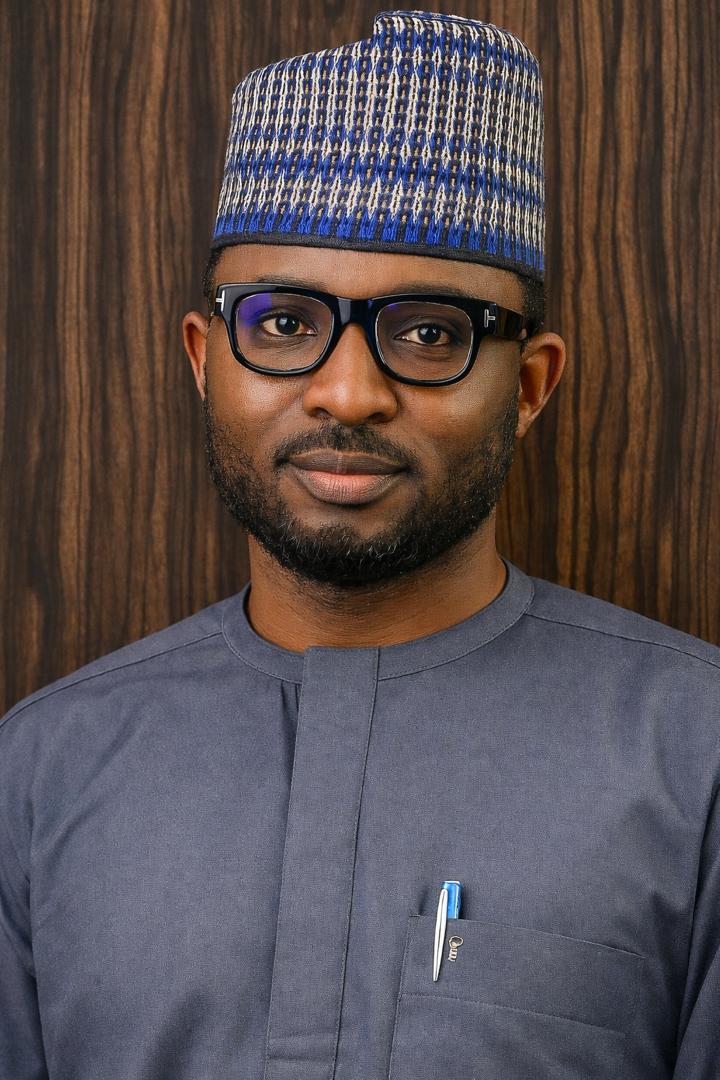
Bem Max Nomor
Founder, IHS-BiRD & L
FIMC, CMC, MHSN, DFIHS
Digitising the Digi-prived
Confronting Digital Erasure and Reclaiming Africa’s Place in Global Knowledge Before Algorithms Define It
I founded the Institute for Historical Studies, Biographical Research, Documentation, and Legacy (IHS-BiRD & L) to address the systemic digital exclusion of Nigerian history. Over the course of approximately fifteen years of active contributions to digital knowledge platforms, I have witnessed a persistent underrepresentation of African narratives, leaving our stories at risk of erasure in the global knowledge space.
Since 2009, I have been an active contributor to Wikipedia and other Wikimedia projects, as well as other wiki platforms, writing and editing numerous entries with a passion for preserving facts, correcting inaccuracies, and amplifying lesser-known stories.
However, over the years, I came face-to-face with a deep systemic issue whereby voices and narratives from Africa (particularly those from my Nigerian area of interest) were being excluded, not because they lacked merit, but because they lacked the type of documentation required to be deemed “notable,” especially by Wikipedia standards.
Far too often, “notable” individuals, organisations, and events from our part of the world are passed over or rejected on Wikipedia because there are no published books, scholarly references, digitized records, or publicly available and accessible or sufficient records to support their existence or impact.
Wikipedia’s notability guidelines are meant to maintain editorial standards. As such, they depend a lot on what Wikipedia calls the availability of “significant, independent, and reliable sources.” Significant means the coverage of the topic must be in-depth; independent means it must not be affiliated with the subject; and reliable means it must be fact-checked and trustworthy. On the surface, this looks perfect.
However, in many African contexts, those kinds of sources aren’t often available – not because people haven’t achieved “significant” things in the literal sense of the word, but because their stories haven’t been documented, or adequately documented according to Wikipedia standards. Even where Wikipedia-significant sources exist, they are still, most of the time, accused of not being independent of the subject, hence not reliable.
While these African sources may, in a few cases, be truly biased, in most instances, Wikipedia’s standards are culturally biased – often tilted against African sources. When viewed through the African cultural behavioural lens of gratitude, which includes reverence, praise, and respect, aimed at encouraging noble behaviour and happenings, even significant documented writings are dismissed by Wikipedia as promotional.
Take, for instance, something as common as greeting. An African might prostrate, kneel, bow, or use both hands for a handshake, and add verbal expressions of deference. Whereas in Europe, the Americas, and elsewhere, a simple hello, a usual handshake, or at best a hug is the norm. This is often the case even when the African writer is entirely independent of the subject: uninfluenced, unaffiliated, and not attempting to appeal to the subject in any way, but simply expressing themselves in accordance with traditional African cultural norms
The result is a skewed representation of Africa on Wikipedia, where negative narratives often face fewer obstacles than accounts of achievement and transformation. For this reason, it is often easier for African content about ignoble events, warring communities, dishonourable individuals, etc., such as thieves, terrorists, internet fraudsters, or politicians under investigation, to pass the review process than to approve of entries that highlight noble achievements or positive contributions. For example, in 2015, I added a section titled “Uncommon Transformation” to the Wikipedia biography of Godswill Akpabio, documenting (with adequate significant, independent, and reliable citations) the developmental projects Akpabio implemented as Governor of Akwa Ibom State. From my experience on Wikipedia, Akpabio’s “Uncommon Transformation” in Akwa Ibom has enough documented independent and credible sources, and deserves a definitive standalone Wikipedia article. Creating just a section under his biographical entry shouldn’t have been an issue of contention. Despite its factual basis, the “Uncommon Transformation”section was removed as promotional. In contrast, when some other contributor later added a section on “Corruption Scandal” and, more recently, “Sexual Harassment Allegations,” these were accepted without dispute, considered trustworthy, neutral, and worthy of preservation on the platform for posterity.
But even when negative bias is not overt, structural hurdles still persist. Even when a source is accepted without dispute, considered trustworthy and neutral, and meets the notability criteria, the subject may still fail Wikipedia’s review if it is not sufficiently covered in multiple independent sources. While Wikipedia does not specify an exact number, experience shows that a subject typically needs to be discussed in depth in about six or more independent publications to be deemed notable. This, however, ultimately remains at the discretion of interested editors.
Let me put a caveat here: I do not believe that Wikipedia’s policies are deliberately engineered to be biased against Africa. Wikipedia is a global community that adjusts its rules and policies through a voting process, while granting administrators the right to overrule debates as trusted custodians who are nominated and elected based on their commitment, dedication, and longevity in contributing to the project. It has numerous editors of African descent.
However, Wikipedia is dominated by the Global North, and as such its policies are rooted in Western epistemology, with its methods and worldview shaped by European thought. The few Africans who eventually rise to the rank of administrators or even reviewers are, sadly, often “deletionists” who, for reasons that remain unclear, lead the charge in deleting African content from the platform.
In 2020, I created the Wikipedia page for the Tor Tiv stool. Subsequently, I wrote biographical entries for Tor Tiv II, III, and IV – Gondo Aluor, James Akperan Orshi, and Alfred Akawe Torkula, respectively – and submitted them for review, using a few available sources. However, the entries were returned to draft for incubation due to a lack of adequate documented sources to prove their notability. I managed to hold on to multiple newspaper reports announcing the death of Akawe Torkula at the time, which helped his entry scale through the review process. As for those on Gondo Aluor and Akperan Orshi, they were never accepted, even as Stubs (a short underdeveloped article that requires further expansion to meet the standards of a complete Wikipedia entry), despite their clear “notability” of having reigned as supreme leaders of the Tiv nation and Akperan Orshi being awarded the National Honours of Officer of the Order of the Niger (OON).
January 2024, however, marked a turning point for me. I had documented the biographies of two of Nigeria’s longest-serving school principals, Reverend Father Jeremiah Dermot O’Connell and Reverend Father Angus Fraser. Father O’Connell served as Principal in Nigeria for 50 years, while Father Fraser did so for 43. Both passed away in 2018. In recognition of their contribution to education, they were awarded the Member of the Federal Republic (MFR) honour during their lifetimes. Yet, their notability was questioned on Wikipedia. These articles were contested by Editors on the grounds that the subjects were not notable and lacked verifiably written sources. I challenged the decision, citing their national honours – Member of the Order of the Niger (MFR), as evidence of their notability. But I was shocked when a reviewer told me the honours were too low-ranking and therefore “insignificant,” to prove their notability, and that the few sources I had cited didn’t offer in-depth coverage.
It felt as though the sovereignty of my country was being questioned, as if we had returned to 1796, when “Mungo Park discovered the Niger” and defined it. A non-Nigerian telling me that a national honours award, conferred by an Act of Parliament and awarded to only 5,757 Nigerians out of over 230 million, is insignificant? All the same, I took it as rules being rules and accepted it in good faith without further argument, to avoid being tagged as biased or having an undisclosed conflict of interest, which warrants a suspension or permanent ban from the site.
I managed to get Father Fraser’s article to stay without issues. But Father O’Connell’s article still carries a banner contesting his notability and requesting additional sources to date.
Many significant articles, covering places, events, and people vital to our heritage have been rejected on Wikipedia, not because their legacy lacks importance, but because they are absent from sources recognized by dominant digital standards. This issue lies at the core of the digital exclusion that the Institute seeks to challenge and remedy.
Out of the more than two million biographies on English Wikipedia, only a small fraction are about people of African origin. While exact counts vary depending on definitions and data sources, the imbalance is stark enough to be visible even without precise figures. This underrepresentation is not an isolated anomaly of the site’s categorisation; it reflects a deeper and well-documented structural skew in the way global knowledge is recorded online. As The Guardian has pointed out, “there are more Wikipedia articles written about Antarctica than all but one of the 53 countries in Africa,” and in some cases even more about fictional worlds like Middle Earth than entire African nations. Large swathes of the continent remain a “virtual terra incognita,” not because African histories and lives lack significance, but because the systems and contributor networks that feed Wikipedia have historically been concentrated in the Global North. This disparity is more than a matter of coverage. It shapes how the world is seen, whose stories are told, and which lives are given cultural weight in what has become one of humanity’s most influential repositories of information.
You may be wondering why I have dwelt so extensively on Wikipedia. The reason is simple: Wikipedia is the most consulted reference source on the internet. It consistently ranks among the top results on Google and has become the primary source of information from which new AI tools, including Google’s Search Generative Experience (SGE) and large language models (LLMs), derive their responses. With over 6 million English-language articles and billions of monthly views, Wikipedia shapes global understanding more than any knowledge repository in history. Because its content is licensed under Creative Commons, it is freely crawled and integrated into most AI training datasets. This means that the presence or absence of African content on Wikipedia doesn’t just affect public perception – it directly impacts how our continent is represented in the emerging architecture of artificial intelligence. In that sense, the stakes are far higher than they may appear.
These digital erasures forced me to look beyond platforms like Wikipedia and confront a more uncomfortable truth: that much of the silence about our stories begins at home, in our own forgotten archives and neglected scholarship. Why do valuable undergraduate and postgraduate academic works in History Departments sit gathering dust? Why are practically all of them never published, never seen, never read by another after grading, and eventually discarded, when some of the information in them, however “novicely” written, does not exist in any other written form? Why are we not encouraging and guiding our students to publish their research works at the end of their study? Why do our local stories and heroes remain unsung in the age of digital memory? And who is curating the digital content that will feed the next generation of Large Language Models (LLMs) – models that will increasingly shape global understanding of every culture, especially as the world shifts from a long list of search results to sharp and precise AI-chatbot answers to specific questions? The responsibility to clear misinformation and misunderstanding of our continent lies solely in our hands.
As Boniface Mungai of the Catholic University of Eastern Africa and other African scholars rightly argue, the crisis facing African archives is no longer theoretical; it is existential. Irreplaceable historical documents are decaying in private homes, fragile local repositories, and abandoned institutions. Much of Africa’s unwritten past remains trapped in oral memory, while even the written sources, often lost to ignorance, disaster, or neglect, are rarely digitized or made accessible.
In contrast, countries in the Global North are moving rapidly toward full digital preservation, ensuring their records are safely encoded, searchable, and protected for future generations. We, by comparison, are in danger of allowing our histories to vanish. Digitizing uncollected African historical sources is not merely a matter of convenience. It is an imperative innovation, a necessary rescue effort to preserve voices, affirm memory, and give history a future. If we fail to act, we will leave our descendants not knowledge, but silence.
The “great digital divide” between the Global North and South, particularly Africa, which Ali Mazuri described as the digitized and the digi-prived, a gravitation from the haves and the have-nots, is no longer just about access to hardware. It now includes soft representation: the visibility of people, communities, and cultures on digital platforms. It is the divide between the represented and the underrepresented or overlooked: between those whose stories shape global knowledge through broad digital exposure and those whose histories remain undocumented, and thus vulnerable to distortion, misrepresentation, or erasure.
Confronting this erasure became a personal calling. I founded IHS-BiRD & L to help close the digi-prived gap by nurturing a digital generation of historians in the tradition of Jacob Egharevba, J. F. Ade-Ajayi, Samuel Ajayi Crowther, and Akiga Sai.
That vision is what the Institute is committed to fulfilling: by encouraging and facilitating the research, documentation, and publication of histories, biographies, and legacies that matter. We will ensure that no story worth telling is lost to silence. We want future generations of scholars, students, historians, and AI systems to find our truths, hear our voices, and feel our impact.
The Institute was born as both a remedy and a rebellion. It is a response to years of erasure, silence, and structural neglect that have kept a lot of Nigerian stories out of global records. It offers not only a platform for memory, truth, and identity, but also a practical tool for confronting digital exclusion and epistemic injustice.
IHS-BiRD & L is where history meets activism; where documentation becomes resistance, and preservation becomes power. I invite all who recognise that today’s archives will shape tomorrow’s algorithms, textbooks, and global understanding to join us.
This is more than a project, it’s a movement.
Join us to document the truths of our past, shape the knowledge of tomorrow, and make sure that silence never writes our story.
Thank you.
Bem Max Nomor, FIMC, CMC, MHSN, DFIHS
Founder, IHS-BiRD & L
Our Vision
To be Africa's leading center for historical scholarship, research, and preservation, advancing the study of Nigeria's past and inspiring the creation of a future rooted in historical wisdom.
Our Commitment
To pursue historical truth with integrity, honor all voices and perspectives, and create spaces where Nigeria's diverse histories can be studied, debated, and celebrated with respect and rigor.
Support Our Work
Every contribution—whether financial, intellectual, or through volunteerism—helps us fulfill this noble mission. Together, we can ensure that Nigeria's history is preserved, celebrated, and passed on to future generations in all its complexity and richness.
Make a Contribution"In preserving the stories of yesterday, we illuminate the path to tomorrow."
— Memoria Futuri (Memory of the Future)