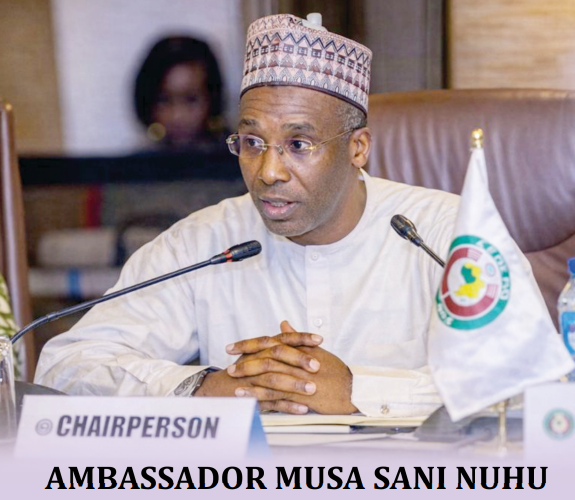
IHS-BiRD & L Confers Highest Honour on Ambassador Musa Sani Nuhu for Strategic Leadership at ECOWAS
Decision follows structured assessment of his multilateral stewardship, crisis diplomacy, and institutional strengthening within West Africa’s regional bloc.
Abuja, Nigeria — The Governing Council of the Institute for Historical Studies, Biographical Research, Documentation and Legacy (IHS-BiRD & L) has approved the conferment of its highest institutional distinction, the Grand Legacy Laureate of Public Service (GLLPS), on Ambassador Musa Sani Nuhu, following what the Institute described as a comprehensive documentary evaluation of his public service record.
The decision was reached after an internal review conducted under the Institute’s evaluation framework, which assesses candidates on the basis of verifiable institutional records, measurable structural impact, and sustained contributions to governance and public administration.
According to the Institute, the GLLPS is reserved for individuals whose service strengthens institutions and leaves demonstrable structural footprints within public systems.
The review examined Ambassador Nuhu’s diplomatic career spanning more than two decades in Nigeria’s foreign service, including his leadership roles within the Economic Community of West African States (ECOWAS) and other regional and international engagements.
Particular attention was given to his tenure as Nigeria’s Ambassador and Permanent Representative to ECOWAS from 2020 to 2025, a period that coincided with major political and security developments across West Africa.
Upon assuming office in January 2020, Ambassador Nuhu oversaw the restructuring of Nigeria’s Permanent Mission to ECOWAS, transforming it from a limited “smart mission” structure into a full multilateral diplomatic platform organised around thematic clusters aligned with the ECOWAS Commission's directorates.
The reorganisation expanded Nigeria’s monitoring capacity across the organisation’s policy areas, improved coordination with Nigerian ministries and agencies responsible for regional integration matters, and strengthened the country’s engagement with ECOWAS institutional processes.
The Institute described the reform as a “durable administrative intervention with long-term implications for Nigeria’s multilateral engagement within the Community.”
The assessment also highlighted Ambassador Nuhu’s role within ECOWAS peace and security mechanisms during the period from 2021 to 2024, when the region experienced military takeovers in Mali, Burkina Faso, and Niger.
During this period, he served as Chair of the ECOWAS Mediation and Security Council at the ambassadorial level, where he facilitated member-state deliberations on sanctions, suspension measures, and transitional political frameworks arising from the political changes in the Sahel.
The political crisis ultimately culminated in the announcement by the three Sahelian states of their intention to withdraw from ECOWAS and form the Alliance of Sahel States (AES).
The Institute noted that the period represented one of the most severe institutional stress tests in the regional organisation's history.
“Stewardship during moments of institutional vulnerability is a defining measure of durable public service,” the Institute stated in its evaluation.
Beyond crisis diplomacy, the review cited Ambassador Nuhu’s contributions to governance reform and institutional coordination within ECOWAS structures. These included his leadership as Chair of the ECOWAS Permanent Representatives Committee, participation in discussions on institutional restructuring within the Commission, and earlier service as Chair of the ECOWAS Administration and Finance Committee (2018–2019).
His tenure also involved engagement with mechanisms aimed at strengthening coordination between ECOWAS and the African Union, including the establishment of structured consultations between the AU Peace and Security Council and the ECOWAS Mediation and Security Council.
The Institute further referenced Ambassador Nuhu’s role in regional economic integration initiatives, including advocacy for the ECOWAS Trade Liberalisation Scheme (ETLS) and engagement in efforts to address trade bottlenecks along the Seme–Badagry corridor, one of the region’s major commercial routes.
Beyond ECOWAS, the Institute’s assessment considered his broader diplomatic career within Nigeria’s foreign service. Ambassador Nuhu has served in several divisions of the Ministry of Foreign Affairs, including the Inter-African Affairs Division and the Asia and Pacific Division, and has held diplomatic postings in Indonesia and Algeria.
He also served as Head of Nigeria’s ECOWAS National Unit and as Chargé d’Affaires ad Interim at the Nigerian Embassy in Algiers, where he coordinated Nigeria’s bilateral engagements with Algeria and represented the country in multilateral diplomatic processes.
In its final determination, the Institute stated that the Grand Legacy Laureate of Public Service recognises public service grounded in institutional strengthening, strategic diplomacy, and measurable contributions to governance systems.
“The purpose of the honour is to recognise public service that leaves institutional legacies rather than personal prominence,” the Institute said.
The formal conferment ceremony is expected to take place in the coming weeks, with further details to be announced.
IHS-BiRD & L reiterated that the distinction is awarded only on the basis of documented evidence of public impact, consistent with its institutional principles of historical accuracy, preservation of national memory, and recognition of enduring public value.
Attached Documents
More Orders
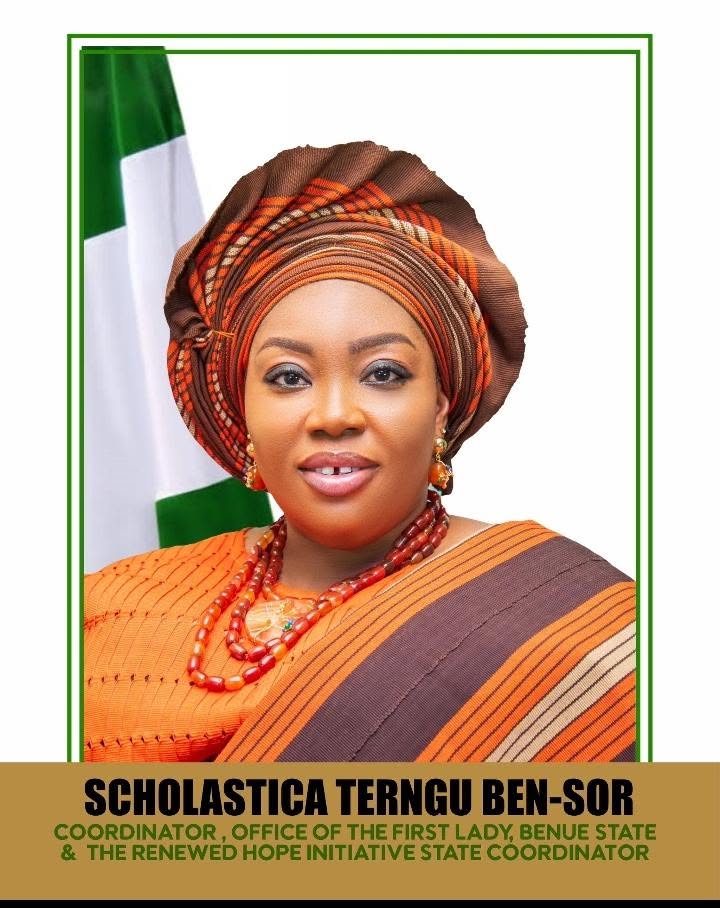
Benue State Coordinator, Office of the First Lady, Scholastica Ben-Sor, Named Distinguished Legacy Laureate of Public Service
Jun 24, 2026
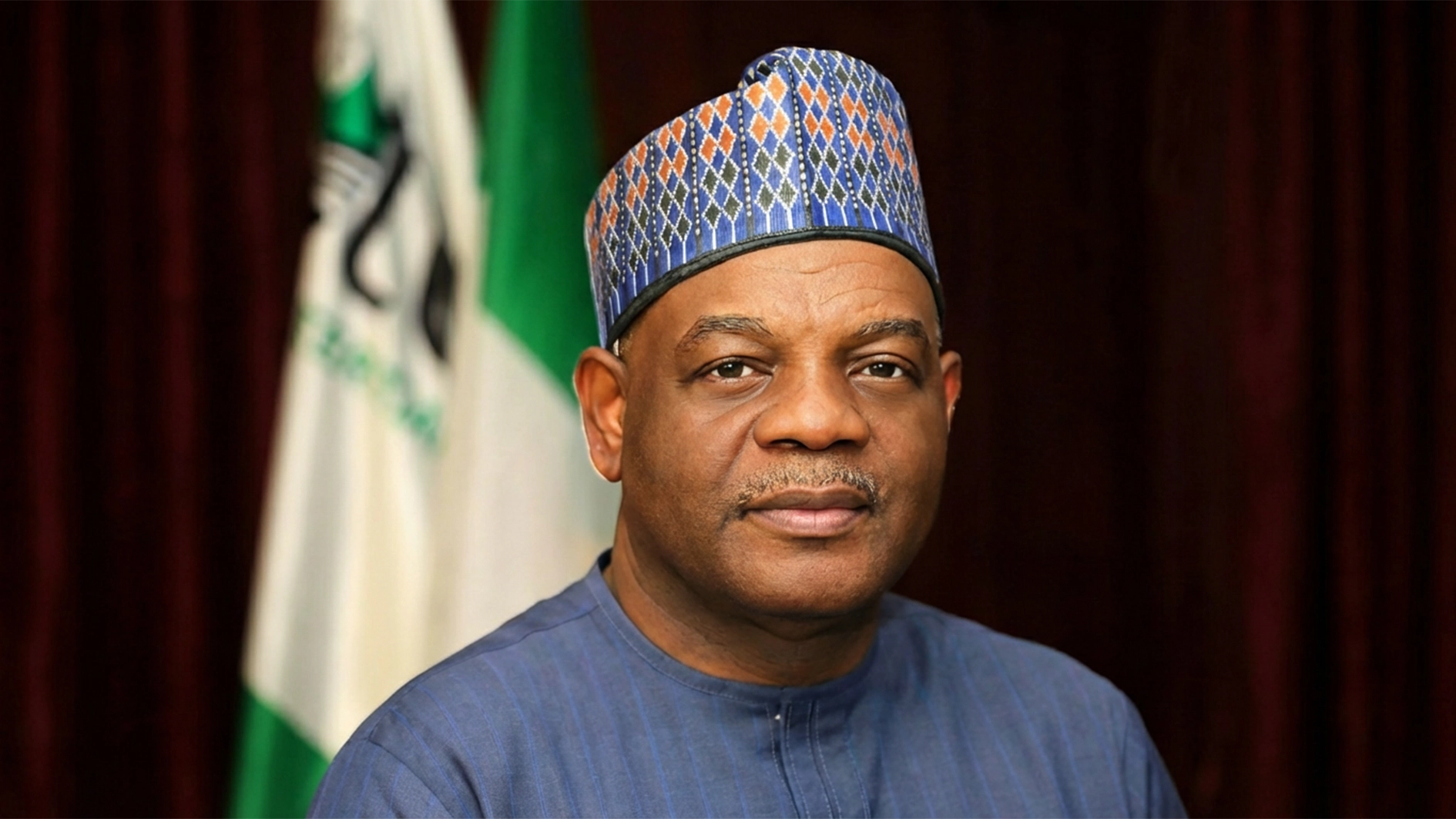
Arc Sonny Echono Selected for IHS-BiRD & L’s Highest Institutional Distinction
May 12, 2026
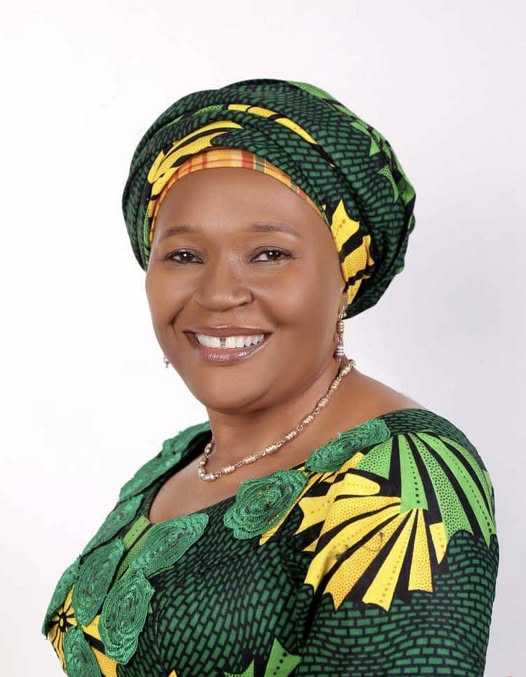
National Librarian Prof. Chinwe Veronica Anunobi Named for GLLPS Conferment by IHS-BiRD & L
May 11, 2026